Commodities and Development: It All Depends…

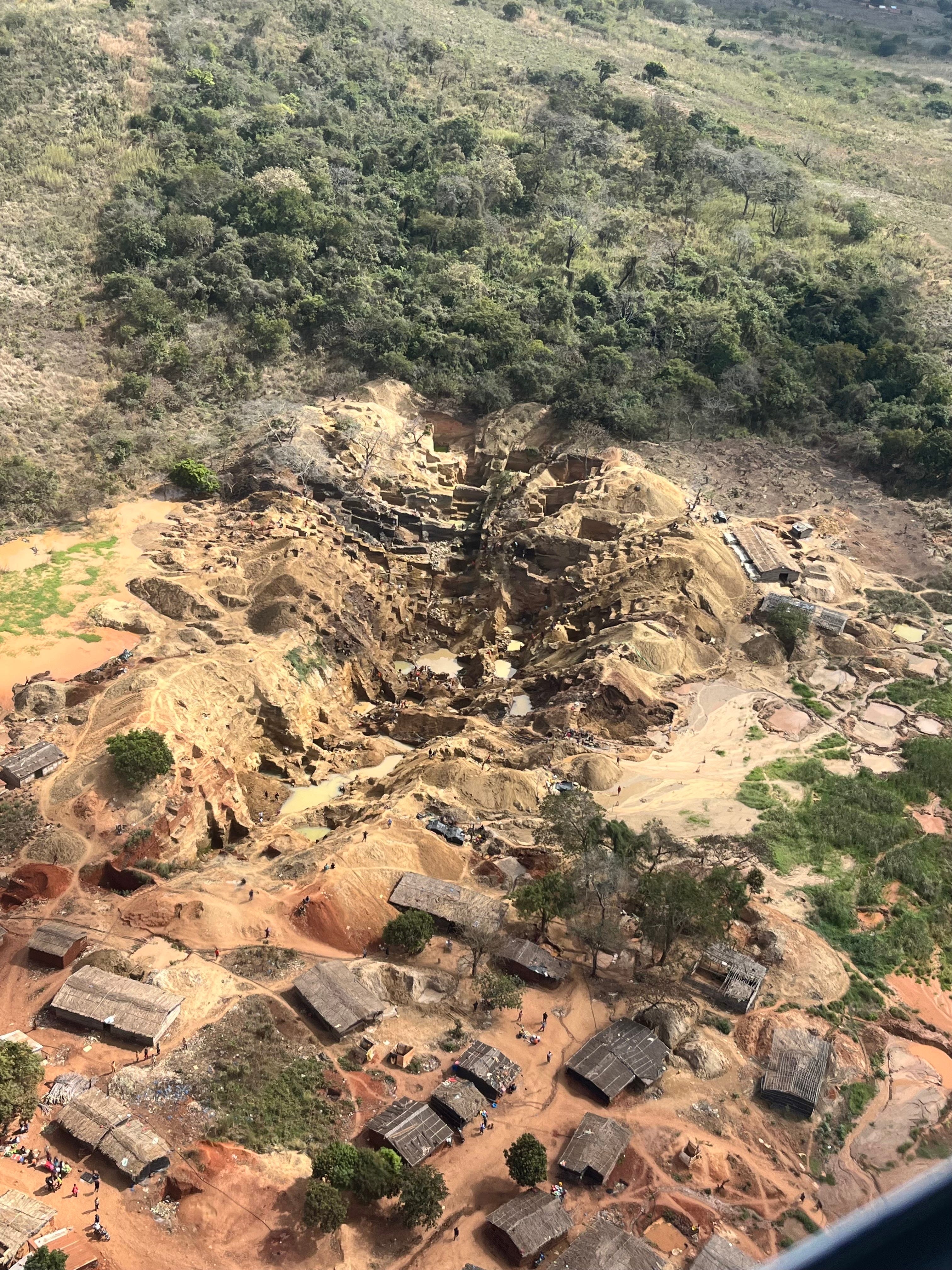
An unlicensed Chinese gold mine in southern Africa.
Stubborn Thing: Over 80% of the world's “least developed countries” are commodity dependent.
Using United Nations data, countries with “low levels of human assets" (limited health and education capacities) and significant vulnerability to economic shocks are classified not merely as low income, but “least developed countries (LDCs).” The UN suggest they’re the “poorest and weakest segment of the international community.” And of the 44 countries that are on the list of LDCs, over 80% of them depend upon commodities (energy, mining, or agriculture) for 60% or more of their exports.
Conservatives have long argued that “trade, not aid” should govern America’s approach to international development. In the first Trump Administration, we crafted a framework called the “Journey to Self-Reliance” which, using objective metrics and assistance tied to those metrics, aimed to help partner countries accelerate their economic development to the point where trade and private investment could —and should— become the dominant feature in their relationship with the US.
Analysis from the United Nations Conference on Trade and Development (UNCTAD) reminds us, however, that not all trade and investment is created equal. More to the point, not all trade and investment produces the development impacts which meet human needs and lessen, if not eliminate, the need for humanitarian support. According to UNCTAD, countries for which trade in commodities makes up most of their exports are (a) less economically stable because of inherent unpredictability in price swings, (b) slower to economically diversify, and (c) more likely to be mired in economic inequality and multigenerational poverty due to the low wages usually paid to farmers and workers (even those employed in strategically important supply chains).
In Africa, many countries which qualify as LDCs are home to critically important minerals and resources. For example, LDCs Angola and Malawi have significant rare earth elements. The Democratic Republic of the Congo and the Central African Republic have cobalt. Guinea has bauxite, and Sierra Leone has bauxite, colton, and graphite. Given the enormous sums that are part of recent investment deals —amounts which often dwarf what those countries were receiving in foreign assistance— there would seem to be no excuse for these countries NOT to be rapidly climbing the ranks of the world’s economies…no excuse for any of them to be LDCs.
But, of course, the mere presence of commodities doesn’t guarantee development impact. Minerals have to be processed, oil needs to be refined, agricultural products need to be carefully stored and transported, etc. More to the point, the dollars paid in exchange for such commodities need to be allocated or invested in ways that spur job creation and mobility, support essential human services, enhance mobilization of other domestic resources, and nurture stable, responsive governance.
For many years, analysts have written of a “natural resources curse” that afflicts countries with great mineral wealth—as though the mere presence of oil, diamonds or the like causes havoc and calamity. But is the curse the presence of something bad…or the lack of something good? The lack of the “connective tissue” of responsive governance that turns financial flows —revenues— into development impacts? And since there’s every indication that the world’s voracious appetite for critical minerals will only grow stronger, shouldn’t the world’s economic powers offer help in building that connective tissue before it’s too late?
UNCTAD’s analysis highlights an enormous strategic opportunity for the US. If Washington makes modest assistance in governance and capacity building part of its approach to trade and investment, the “proceeds” of such deals will be even greater…greater political stability, greater partner reliability, greater human development, and the greater self-reliance which is every country’s goal.
Commodities and development…it all depends.